Adam and Eve meet in Genetics

Mitochondrial Eve/Y-chromosome Adam. This line of reasoning is complicated, but I’ll do my best to be brief. Mitochondria is a component in the cell that is passed on only from the mother to her daughter. And since mutation rates are measurable (from grandmother to mother to granddaughter), the idea that a mitochondrial eve (the first woman) can be calculated to have existed at a certain point in time. The calculated age of the mitochondrial eve is about 6000 years ago. There are some evolutionary calculations that say the mitochondrial eve is dated to have existed 250,000 years ago. But the calculations are based on the assumption that mankind and chimpanzees evolved from a common ancestor, and the mutation rate comes from that assumption rather than the measurable one (from grandmother to granddaughter). The measurable rate fits the Biblical data very well, but it does not fit the evolutionary assumption at all.

Y chromosome Adam is a similar line of reasoning except that it measures the decay rate of the y chromosome, which is passed on only from a father to his son. When these mutational rates are measured and extrapolated back in time, the date fits perfectly with Noah having lived about 4500 years ago. So, while Y-Chromosome Adam does not refer to the historical Adam, the scientific research makes sense when read from a biblical perspective.

DnaInheritance

The latest research from the scientists at ICR reveals that evidence from genetics points strongly to a creation about 6000 years ago, just like the Bible claims.

The results of these genetic studies fit perfectly with the predictions of a young-earth creation timeframe but make no sense when millions of years are added to the mix—the clocks simply cannot have been ticking that long.

Yet again, the scientists at ICR show clearly that the Bible’s historical account of the first pair of humans is verified by today’s science.

Third, studies reveal genetic “clocks” that confirm the Bible’s timeline of a recent creation. Every generation, sperm and egg cells incorporate over 100 DNA copying errors. These errors, or mutations, gradually build up. This means you have at least 100 more mutations than your parents, 200 more than your grandparents, 300 more than your great-grandparents, etc. Wind back the mutation clock far enough and we arrive at Adam and Eve, whose DNA was created error-free. At this rate, humanity wouldn’t last for even 1,000 generations.
 

 Back to the Creation Manifesto Outline

Human mutational decay rate spells doom

Human mutational decay rate. In his book, Genetic Entropy and the Mystery of the Genome, Dr. JC Sanford lays out a case that the mutational load on our genes is so high that the human genome could not have existed for as long as evolutionists say. Our genes are subject to entropy and are passed on from generation to generation, so based on the measurable mutation rate, the conclusion is that humans (and other species) could not have existed for as long as evolutionists tell us. The idea is that information destroying mutations so far outnumber the information-gaining mutations (which, according to calculations (since one has never been discovered) cannot be selected for) create such a burden on the overall genetic code that genes cannot handle the mutational load over time.

hsz-biblical-entropy

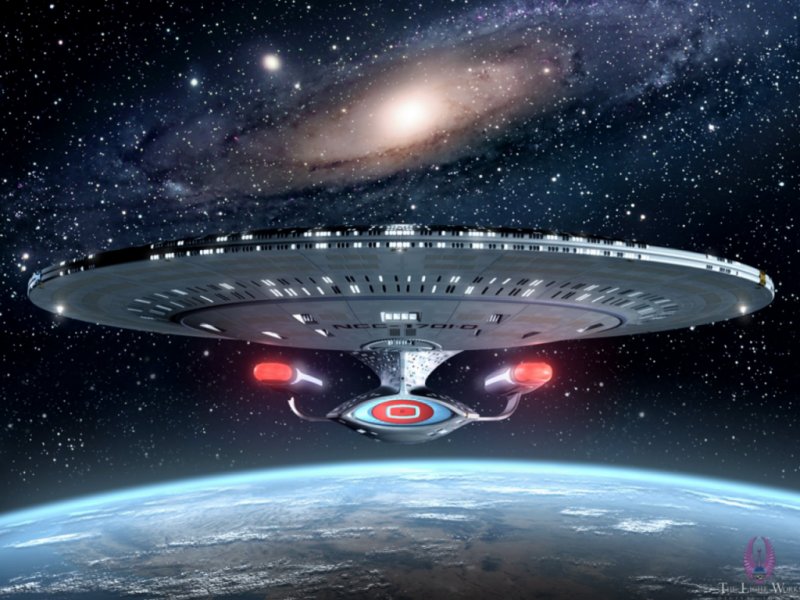
My favorite word picture from the book is: believing that random mutations and natural selection are responsible for the entire “tree of life” from bacteria to mankind is like believing that you could take the assembly instructions for a tricycle and through photocopying errors and quality control measures, arrive at the instructions for assembling a starship complete with hyperdrive and holodeck if given enough time. That word picture accurately describes the evolutionary model.

  • Simple DNA -> Tricycle Assembly Instructions
  • DNA replication -> Photo-copier machine
  • Random Mutations -> Copies of copies through time are slightly different than original
  • Natural Selection -> Sales. As tricycles are assembled with the latest copies of the instructions, the tricycles that sell better, have their instructions reused for copying (You can easily see that copying mistakes in assembly instructions will have little to do with the purchasing of tricycles. Mutations cannot generate enough differences in the assembly instructions to warrant increased fitness.) As the assembly instructions get less and less legible over time, the tricycles begin not to be assembled correctly at all and sales plummet as tricycle quality devolves.
  • Add deep time to the equation, so that random mutations have changed the assembly instructions into forming new and exciting features like wings, lungs, bones, white blood cells… -> Over time the photo-copying of the tricycle instructions yields new instructions like adding additional wheels/axles and changing the peddles to internal combustion engines…

What we see instead is that the copying mistakes begin to wreck the organism. The Theory of evolution teaches that natural selection acting on random mutations can turn the instructions for assembling a tricycle into the assembly instructions for the Starship Enterprise. But observations are the exact opposite. Over time, these random mutations accumulate and lead to extinction. This is observable science. The evolutionary myth is the exact opposite of observable science.

UPDATE:

Evolutionary biology is caught in a catch-22 when it comes to the idea that mutations produce new features.

This is a bit complex — let’s go over it again. Darwinian evolution either (1) produces nothing new, or (2) it’s destined to produce boatloads of deadly junk. In the case of (2), the reward for trying new things is high compared to the cost of building new structures. But in order for the ratio to be high enough for complexity to increase, the cost of building new things must be negligible. Novelties proliferate, but the fraction of the beast that’s vestigial grows, and the organism is eventually swamped and overwhelmed by harmful vestigial features. However, if you try to avoid the problem of (2) by making the reward-to-cost ratio lower, as in (1), then nothing new ever evolves.

 Back to the Creation Manifesto Outline

DNA in Dinosaur bones

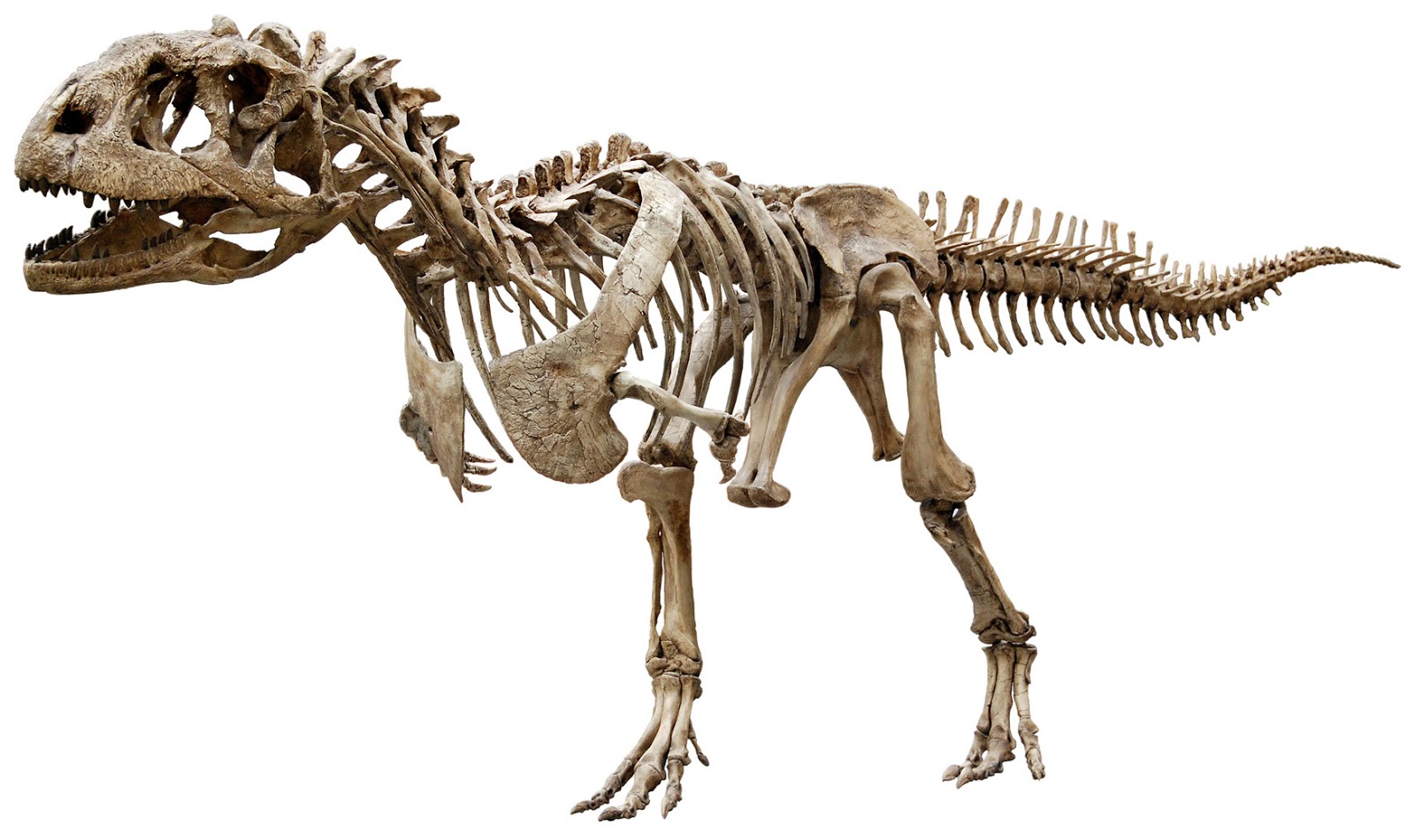
DNA in fossil dinosaur bones. We have been lead to believe by evolutionary scholars that dinosaurs died out more than sixty million years before mankind evolved. So, mankind could never have seen a living dinosaur. Recent scientific studies have confirmed that the half-life of DNA is only 521 years and this means that the DNA of deceased organisms decays beyond recognition after 10,000 years. Unexpectedly for evolutionists, viable DNA has been discovered in dinosaur bones. This would lead to the conclusion that dinosaurs did not die out 65 million years ago as we’ve been led to believe. Corroborating this evidence is the existence of dinosaurs represented in ancient artwork and fossils (astrology charts including dragons, ica stones, stegosaurus at Angkor Wat, Bishop Bell’s brass behemoths, cave paintings of dinosaurs, coexistent human/dinosaur footprints…) Since dinosaurs have been represented in artwork prior to excavations and reassembly of dinosaur bones, the logical conclusion is that mankind has seen living dinosaurs.

For further research on cryptozoology, check out s8int.com.

UPDATE: As more and more research is done, and evolutionary timeframes are being demolished by evidence, scientists are more prone to look in dinosaur bones for DNA. The evidence confirms the worldwide flood as recorded in the Bible.

UPDATE 2: PhD. Biochemist Brian Thomas keeps an updated spreadsheet of the latest soft tissue discoveries in fossils (and un-fossilized materials) which old earthers presume to be millions of years old. You can see this spreadsheet here.


 Back to the Creation Manifesto Outline

Human Population Growth points to a young earth

Human population growth. According to the Bible, the worldwide deluge of Noah’s day took place around 2500 BC, and according to Genesis 8, I Peter 3, and 2 Peter 2 only eight people survived. If we know the current population of the world and the measured growth rate, does this confirm the Biblical account?

bavaria munich octoberfest oktoberfest

Photo by Manuel Joseph on Pexels.com

The measured growth rate over the last 3 centuries varies from .13% to 2.1%.

So what is a realistic growth rate? The Encyclopaedia Britannica claims that by the time of Christ, the world’s population was about 300 million. It apparently didn’t increase much up to AD 1000. It was up and down in the Middle Ages because of plagues etc. But may have reached 800 million by the beginning of the Industrial Revolution in 1750—an average growth rate of 0.13% in the 750 years from 1000–1750. By 1800, it was one billion while the second billion was reached by 1930—an average growth rate of 0.53% p.a. This period of population growth cannot be due to improved medicine, because antibiotics and vaccination campaigns did not impact till after WWII. From 1930 to 1960, when the population reached three billion, the growth rate was 1.36% p.a. By 1974, the fourth billion was reached, so the average growth rate was 2.1% from 1960 to 1974. From 1974 to 1990, when the mark hit five billion, the growth rate had slowed to 1.4%. World population reached 6 billion in 1999 and 7 billion in 2011. The increase in population growth since WWII is due to fewer deaths in infancy and through disease

Another way to measure the rate of human growth is to look at how often the population doubles. If the human population were to double at the absurdly low rate of every 150 years, started with eight people, after 32 doublings (which is about 4800 years), there would be 8.6 billions people.  So, even assuming the lowest possible growth rate, the current human population is easily within the expected range of the biblical time frame.

On the other hand, if we were to assume an evolutionary emergence of humans between two million and 50,000 years ago, the current human population is too small by orders of magnitude. Even just assuming the latest emergence of humans on the evolutionary scale at 50,000 years ago and the population doubling at only every 150 years, the current population should be a googol. So if evolution were true, why didn’t the human population reach its current number tens of thousands of years ago?

The world’s current population and the measured growth rate of population correspond exactly to a beginning population of eight about 4500 years ago. The population would have begun at eight about 4500 years ago if the Biblical flood of Noah’s day happened as the Bible says. If what we are taught by evolutionists were true, humans have been around for about 200,000 years. If population growth rates extended from 200,000 year ago to now, trillions of humans would have had time to live. There are also not nearly enough buried bodies to account for humans to have existed for hundreds of thousands of years.

 Back to the Creation Manifesto Outline