If the Bible is the inspired Word of God, then whatever it teaches can be
known to be true—including what it teaches about the age of the Earth
#2: Polystrate Fossils
#3: DNA in “Ancient” Bacteria Support a Young Earth
#4: Human Population Statistics
#5: Carbon-14 in “Ancient” Fossils and Materials
#7: Human/Dinosaur Co-existence
#8: Tightly Folded Rock Strata
#9: Rapid “Slow” Processes
#10: Amount of Salt in the Sea
#11: Amount of Sediment on the Sea Floor
#12: Lack of Erosion Evidence Between Strata
#13: Helium in Zircon Crystals
#14: “Orphan” Radiohalos
#15: Clastic Dikes
#16: Faint Young Sun Paradox
#17: Rapid Decay Rate of Earth’s Magnetic Field
#18: Lunar Recession Rate
#19: Atmospheric Helium Content
#20: Spiral Galaxies
#21: Comet Contradiction
The Bible implies that the Earth is around 6,000 – 10,000 years old, while the conventional belief held by many is that the Earth is 4.5 billion years old. Is the Bible wrong about the age of the Earth? Abundant evidence exists from the disciplines of paleontology, archaeology, geology, astrophysics, and geophysics which supports the biblical time frame, while refuting deep time.
The age of the Earth, according to naturalists and old-Earth advocates, is 4.5 billion years. Young-Earth [or Biblical] creationists contend that the Earth is on the order of thousands, not billions, of years old. Is there evidence to support the young-Earth creationists’ premise?
First, as we have shown elsewhere, the biblical narrative implies that the Universe was created with an immediate appearance of age in many ways. Adam and Eve were not mere zygotes, but walking, talking, working, and procreating individuals…
Over at Premier Christianity, geologist and priest Michael Roberts provides 10 questions to ask a young earth creationist. Old earth creationists and evolutionists have been asking these same questions for decades, but it’s as if Roberts thinks he’s the first to come up with them. On the contrary, young earth creationists have answered these questions for as long as anyone has thought to ask them. I’ll link to a response by Creation Ministries International, and then provide my own, responding to what I think is Robert’s main contention.
At the heart of these ten questions is whether or not the Bible really addresses geology and the age of the earth, and if it really matters. Roberts (and other evolutionists) wants to convince us there’s a huge majority of educated people, including scientists, who believe in God, evolution, and an earth that’s 4.6 billion years old. In other words, he’s…
Using scripture to interpret scripture is essential to understanding the Bible. Most of the people and events in the first chapters of Genesis are referred back to by both Old and New Testament authors. Even more importantly, Jesus Himself spoke often about Genesis.
It is these divinely-inspired statements that provide the interpretive framework for recognizing the historicity of Genesis. Three things become apparent when looking at these passages:
The Biblical authors saw the events and people of Genesis as real history.
They understood those historical events had spiritual and theological consequences.
They realized those consequences continue to have an impact on the present day.
Since it is helpful to read what was actually said, here are some of the more important statements about Genesis.
Moses & Isaiah
“For in six days the Lord made heaven and earth, the sea, and all…
Darwinism’s much-touted and largely doubted mountain of evidence feeds a valley of death–the cold, purposeless, meaningless death of natural selection makes life in the valley heartily attractive to the strong, and hardly attractive to the weak.
The great failure of Darwinists is not only their failing to produce any evidence to support their theory in its strong form (all life from non-life in ever increasing information-bearing specified complexity), but in their obstinate refusal to admit and own up to the fact that their force-fed ideas (that few people believe) have predictable consequences (that no one likes).
Ideas have consequences. If Darwinism is correct, and we truly are the result of unguided, chance mutations that made us more successful at killing off weaker beings, then we must live with the difficult task of trying to formulate any reason why we all should not simply continue nature’s task. Unguided purposeless processes produced our mind, but what is to produce our morals? If science has defined our facts, can’t science define our values? So far Darwinists have not been able to come up with any coherent ethic consistent with both the inherent human ethos and their heartless killing machine. Look it up, no one can do it. And no one ever will.
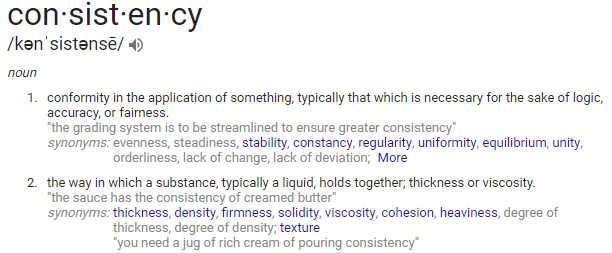
#ConsistencyMatters!
The argument (evolutionism) that has set itself up against the knowledge of God is impotent.
…also, if anyone has links to Roddy Bullock’s blog entries, please let me know.
UPDATE: I found a 2nd article by Roddy Bullock! Enjoy!
The book of Amos is a reminder to humanity that worshiping the Creator is the purpose of creation. When mankind wants to worship themselves, God gives the gift of suffering (Amos 4) as a megaphone to re-calibrate one’s thinking.
I imagine many Christians can increase their knowledge of the Minor Prophets. Here’s a survey of the third book of the Minor Prophets: Amos.
Purpose: We will look at the authorship, purpose, structure and other aspects of the book of Amos so we would be more familiar with this part of the Bible and yearn to study it for ourselves.
Interview with Dr Ting Wang, lecturer in Biblical Hebrew
by Jonathan Sarfati
Dr Ting Wang earned his M.Div. from Westminster Theological Seminary in California (Escondido) and his doctorate in Biblical Studies at the Hebrew Union College, Jewish Institute of Religion (Cincinnati, Ohio). He now lectures on biblical Hebrew at Stanford University in California,1and is a pastor for the Youth and Children’s Ministries at Korean Central Presbyterian Church. Dr Wang is a member of the Society of Biblical Literature and the National Association of Professors of Hebrew. He has also been a college instructor in biblical and classical Greek. Dr Wang lives in Palo Alto with his wife, Becky.
While the creation evangelism message is helping to win many people to Christ, there is strong resistance within parts of the church. While most attacks focus on the science involved, many otherwise conservative theologians claim that Genesis really doesn’t mean…
This is my part of an interaction I had with an atheist. They claimed over and over that my claims of revelational epistemology were nonsense. I hope you find encouragement in reading through my comments and that they help you more faithfully share the gospel.
Revelational epistemology is a valid field of philosophy. Philosophers such as Val Til, Bahnsen, White, and Lisle did or are teaching this branch of Christian thinking. So, my statement is not nonsensical…in fact, it is the reason we can actually determine ideas to have rational value in the 1st place.
God revealed Himself in creation. Even Dawkins recognizes this fact even though the idea of design by God is abhorrent to him. Dawkins conjured up the contradictory idea of “bottom up design” in an attempt to explain the clear design of the universe out of philosophical convictions…not scientific ones
God revealed Himself in the Bible. The Bible claims to be the Word of God, & it records many prophecies that, once fulfilled, have verified its authenticity. The Bible also records historical events that forensic scientists have over and over corroborated the truthfulness of the recordings.
God revealed Himself in Jesus. Jesus claimed to be God during his earthly ministry. His claims make him either a liar, a lunatic, or the LORD of glory. Which do you think Him to be? His appearance, life, and resurrection both fulfilled numerous old testament prophecies and verified his claims of divinity. Recognizing these facts and repenting of one’s rebellion against the Creator brings forgiveness and abundant life.
Now, to get to the consistency of one’s WV. For Christians, all of these elements are both internally and externally consistent:
matter – God is outside of time/space and brought all of the cosmos into existence (John 1). Because of the curse of sin, we would expect to see decay, suffering, and death in anticipation of God’s ultimate victory (Isaiah 11)
truth – God claims to be source of truth (John 14:6, Prov 26:5)
laws of logic/reason – Laws of logic are unchanging, abstract, and universal. God provides a foundation for LoL because He is immutable and transcendent
Unchanging physical laws, uniformity of nature, induction – Like laws of logic, these laws are abstract and unchanging…like God
morality/human value – Mankind is created in God’s image so has great value (Gen 1:27, Matt 22:37-40)
Generally reliable senses – Although perverted by the curse of sin, senses still function to glorify God, so Christians would expect them to be generally reliable
Human consciousness – God breathed life into humanity (Gen 1:27)
Human ability to comprehend matter, truth, physical laws, morality – It is expected that humans be able to comprehend the things of the universe and abstractions because by doing this, humans bring glory to God.
You can dislike this line of argumentation, but it is illogical & irrational to claim that my WV lacks internal coherence. It is also externally consistent because it solves the problem of induction, provides a truth anchor and has verification through the Bible and Jesus.
“IF you say something like “X Y and Z are true, therefore I believe that God has revealed himself, ergo these other things are true”, then perhaps a conversation could be had”
This is a fundamental misunderstanding of the fundamentals. Since God is my ultimate authority, there is no HIGHER authority by which to compare his revelations. He is my epistemological foundation. But it is because He provides this foundation that we can evaluate things using logic, science, evidence to determine things to correspond to rationality or not.
You very much want the ambiguous term “evidence” to be your epistemological foundation except that to evaluate evidence, you have to justify laws of logic, truth, and morality for the evaluation to make sense. Besides, everyone interprets evidence according to their worldview. So, evidence makes a poor epistemological foundation.
I’ve struggled with how to communicate the inherent contradictions of worldviews that do not start with the unchanging, unbound, transcendent Creator revealed in creation, the Bible, and in Jesus.
This is not the perfect communication medium, but if a picture is worth 1000 words, it assists with pointing out the inconsistency when naturalists assume certain aspects of reality. Based on their assumptions, to give a proper satisfactory explanation (justification) for the following components of reality, they must borrow from the Christian Worldview.
Truth – how it can be known for certain
Absolute Laws – math, physics, chemistry, laws of logic, thermodynamics
Internet philosophers love to point out contradictions…especially perceived contradictions in the Bible. The charge that the “Bible endorses slavery” is rampant and definitive. To those making the charge, no further argument is needed, and the case is closed because <outrage font> “slavery is wrong!”
Let’s analyze this claim and tactic. By what absolute standard do YOU declare slavery to be wrong/immoral/evil? For those who claim the worldview of naturalism/materialism/absurdism, what is evil? The priests of naturalism have this to say about human origins:
Carl Sagan – “The cosmos is all that is or ever was or ever will be.”
Tyson – “We (humans) are not figuratively but literally stardust.”
Dawkins – “The universe that we observe has precisely the properties we should expect if there is, at bottom, no design, no purpose, no evil, no good, nothing but pitiless indifference.”
Nye – “We are just a speck, on a speck, orbiting a speck, in the corner of a speck, in the middle of nowhere.”
So, if humans are the accidental aggregate of stardust on a speck of a speck in the midst of a blind, pitiless, indifferent universe made only of atoms, how can they justify unchanging, abstract universals like truth, morality, math, laws of logic, and physical laws by which to judge something or someone as evil? It is inconsistent and absurd for the naturalist to make judgments against the Bible as somehow immoral. What does stardust (humans) care about morality? What intrinsic value does stardust have such that it needs to be protected from slavery? How could stardust reason…and with what unchanging absolute tools?
So, if you do not start with the God of scripture, who revealed Himself in creation, in the Bible, and in Jesus – your outrage against ANYTHING God does, commands, or endorses is impotent.
But how do Christians understand the “endorsement of slavery” within the Bible? Is there a positive case to be made that would help Christians to understand the negative perception? Let’s look at scripture and see:
Because everyone has sinned and there are uncontrolled consequences for rebellion against the Creator, mistreating people has become ubiquitous. Since the fallen idea of might-makes-right was recognized as the dominant paradigm in place of being God’s image bearers, slavery had a fertile garden in which to grow. The mightiest, richest, and/or craftiest have always been able to selfishly extort and manipulate other people. Slavery is actually the expected result of the human condition BECAUSE of the sin nature within mankind.
The charge is that the Bible endorses slavery. What is the definition of slavery? In 1960, if someone said they were gay, what would that have meant? They were happy. In the 21st century, saying you’re gay has a completely different connotation. In the 21st century slavery is a polarizing term that means: White people owning/abusing/killing black people. To put this into perspective, let me explain a few things, Americans have received free education from our respective local governments from K-12 grades. We learned reading, writing, arithmetic, history, sociology, physics, music, and biology. With that education, and in a capitalist society, we can use those precious gifts to find employment and support our respective families. This was not the case 3000 years ago when the Bible was written. All over the world, for someone to live and eat they would need to “sell or rent” themselves into indentured servitude (slavery). Those who did not own land or were uneducated had no recourse other than to serve in the military or serve as a laborer. Both the old and new testaments set requirements for masters to treat their workers as valuable humans. The Bible gives clear boundaries and punishments for masters to treat their indentured servants as they themselves would want to be treated.
Those who would kidnap and enslave others involuntarily are specifically condemned: I Timothy 1:10 “Now we know that the law is good, if one uses it lawfully, understanding this, that the law is not laid down for the just but for the lawless and disobedient, for the ungodly and sinners, for the unholy and profane, for those who strike their fathers and mothers, for murderers, the sexually immoral, men who practice homosexuality, enslavers, liars, perjurers, and whatever else is contrary to sound doctrine.”
In Matthew 22 Jesus is recorded to have said “Love the Lord your God with all your heart and with all your soul and with all your mind. This is the first and greatest commandment. And the second is like it: Love your neighbor as yourself. All the Law and the Prophets hang on these two commandments.” So whether as a master or an indentured servant, love God and love people.
The Egyptians, who had enslaved the Israelites for over 400 years, were harsh masters…so much so that the Hebrews cried out to God for divine intervention (Ex 3:7). God delivered them from the harsh slavery of the Egyptians, and told the Hebrews very clearly to treat indentured servants with mercy. Deuteronomy 15:12-15 says “If your brother, a Hebrew man or a Hebrew woman, is sold to you, he shall serve you six years, and in the seventh year you shall let him go free from you. And when you let him go free from you, you shall not let him go empty-handed. You shall furnish him liberally out of your flock, out of your threshing floor, and out of your winepress. As the LORD your God has blessed you, you shall give to him. You shall remember that you were a slave in the land of Egypt, and the LORD your God redeemed you; therefore I command you this today.”
The Apostle Paul wrote an impassioned letter to a fellow Christian, and it is included in the Bible under the name of the recipient, Philemon. Philemon is the master of an escaped indentured servant, Onesimus. Paul exhorts Philemon “For this perhaps is why he was parted from you for a while, that you might have him back forever, no longer as a bondservant but more than a bondservant, as a beloved brother”
I listened to the audio books of Game of Thrones. I one of the books there were several chapters that described the story of the Dragon queen conquering a land that was defined by slavery. She succeeded in ending slavery in the whole land. When she (as the new queen) began seeing petitioners, one of the former slaves asked her to re-instate slavery because he and many others were now suffering as indigents. He makes the case that as a slave, he was cared for and protected in his master’s house, but when slavery was forcefully ended, it created a new class of homeless and downtrodden. In much the same way, the world prior to Western Culture was plagued with generational slavery. Because many masters were evil and de-humanized their slaves, chattel slavery flourished. But the Christian abolitionist, William Wilberforce helped to re-calibrate the philosophical assumptions that described certain classes of slaves as sub-human to instead show that they were created in God’s image and thus had inherent value. His crusade to end chattel slavery in England swept across Europe and finally into the western hemisphere. Thankfully, today, in this culture, slavery has ended and is unnecessary (for the indigent). Sadly, in other countries, young girls are still forced into sexual slavery because of generational illiteracy and corrupt rulers/elite.
The charge that the Bible is immoral fails for these and other reasons.
Because God has revealed Himself as Holy, unchanging, and transcendent, we can trust his revelation and praise Him in fulfillment of our created purpose. Jesus truly is worthy of all praise!!!
“If there were evidence for God, I would believe.”
“If God were real, he would show me evidence of his existence”
I disagree with all of these statements for multiple reasons that I will point out below, but as often as they come up, I think it’s worth a little push-back to see if the claims can withstand a little scrutiny. Let’s address the claims to see why it is a category error to demand evidence for God.
To evaluate evidence one must be able to account for the preconditions necessary for evaluation. Only the Christian worldview provides these necessary preconditions. Without being able to justify the following 4 absolutes within your worldview, it is a category error to make one of the above claims.
Absolute Truth – If one hopes to evaluate evidence, they must be able to compare it to what is actually true. If there is not a truth anchor, one’s arbitrary truth claims will ultimately lead to an infinite regress or be internally inconsistent (Self-defeating).
Laws of Logic – Evaluating evidence requires the existence of invariant, universal, abstract absolutes. Since God is unchanging, rational, and transcendent, He provides the necessary foundation for laws of logic.
Morality – To honestly transmit observed results, one has to assume invariable honest transmission. At the very least you have to have faith in those transmitting conclusions that the empiricist is unbiased.
Uniformity of nature – To expect nature to be consistent requires assumptions that are inconsistent with a universe that is in a constant state of flux. Justification for unchanging natural laws that bind nature to uniformity requires abstract assumptions that can only be justified by the Absolute Source of uniformity upholding his creation.
Everyone interprets evidence according to their worldview or epistemology. So, it logically follows that evidence cannot sway someone from changing worldviews from say naturalism to Christianity. Imagine an enlightened character in a video game saying, “There’s no game designer or there would be evidence. Game designer theory is a crutch for simple-minded bots who can’t grasp the reality that we are alone on this server. Their pre-Y2K thinking might be good for classic games like Galaga, but today’s games are driven by real scientific thinking not mysterious game-designers in some paradise-like Silicon Valley.” Any effort (short of actually entering the game Himself) by an external game designer to input new elements into the game, the ‘enlightened’ character could say that is part of the game and no game designer is needed to explain it.
Asking for natural evidence of the supernatural is irrational. This is related to item 2 above, because no matter what supernatural evidence is presented, someone who maintains a naturalistic worldview will always exclude supernatural causes. The excuse could be as simple as hallucination from bad mushroom pizza or as complicated as master-level illusion (David Blaine, David Copperfield…) In a recent debate, I asked my opponent what evidence could convince them of the supernatural, and he said, “Well, if someone were dead for a few days and then came back to life, I’d have to believe.” To which I responded, you mean like what Jesus did? My opponent remains unconvinced by the evidence.
Most of the time, a person who claims that there is no evidence for God is a naturalist. The high priests of the naturalists claim “We are literally star dust on a speck of a speck of a speck in a blind, pitiless, indifferent universe.” What does a speck of stardust care about evidence/truth/ANYTHING?
This point refers specifically to the 3rd claim from above “If God were real, he would show me evidence of his existence”. It is deplorable hubris of infinite proportion for any created being to expect the Almighty Creator to be subject to their petty whims. For a person to cry out, “I don’t like the revelations and confirmations that God has given. I want Him to do what I want…right now!” is dangerous audacity. It would be similar to a drug dealer in Sri Lanka shrieking “If The Pope doesn’t come sing at my birthday party, he’s not really the Bishop of Rome.” The Pope’s authority and office are not in question because of the insignificant droning of a foreign criminal.
For all of those reasons and probably many more, the person who claims that there is no evidence for God is making a category error.
God revealed Himself in his creation, in his Word, and by becoming a man: Jesus!
Jesus claimed that extraordinary evidence (even someone rising from the dead) is insufficient to convince someone of God’s existence (See Luke 16 below). If you do not start with the Creator (because of his revelation through creation/Bible/Jesus) you will not be convinced by evidence.
[Luk 16:19-31 ESV] 19 “There was a rich man who was clothed in purple and fine linen and who feasted sumptuously every day. 20 And at his gate was laid a poor man named Lazarus, covered with sores, 21 who desired to be fed with what fell from the rich man’s table. Moreover, even the dogs came and licked his sores. 22 The poor man died and was carried by the angels to Abraham’s side. The rich man also died and was buried, 23 and in Hades, being in torment, he lifted up his eyes and saw Abraham far off and Lazarus at his side. 24 And he called out, ‘Father Abraham, have mercy on me, and send Lazarus to dip the end of his finger in water and cool my tongue, for I am in anguish in this flame.’ 25 But Abraham said, ‘Child, remember that you in your lifetime received your good things, and Lazarus in like manner bad things; but now he is comforted here, and you are in anguish. 26 And besides all this, between us and you a great chasm has been fixed, in order that those who would pass from here to you may not be able, and none may cross from there to us.’ 27 And he said, ‘Then I beg you, father, to send him to my father’s house– 28 for I have five brothers–so that he may warn them, lest they also come into this place of torment.’ 29 But Abraham said, ‘They have Moses and the Prophets; let them hear them.’ 30 And he said, ‘No, father Abraham, but if someone goes to them from the dead, they will repent.’ 31 He said to him, ‘If they do not hear Moses and the Prophets, neither will they be convinced if someone should rise from the dead.’“
Praise God that by His Amazing Grace, we can know forgiveness for our rebellion!!!








 ApoloJedi